
Hong Kong–Malaysia Payments: Bank Transfers, QR and FX
A bank transfer and a shop’s QR payment reach different endpoints. Starryblu’s documented Alipay+ connection makes the distinction concrete.

A faster payment can still leave you with the wrong currency. If a bill is payable in Hong Kong dollars, receiving a dollar token quickly does not, by itself, put spendable HKD into the account that needs to pay it. There is still a conversion and a receiving arrangement to complete.
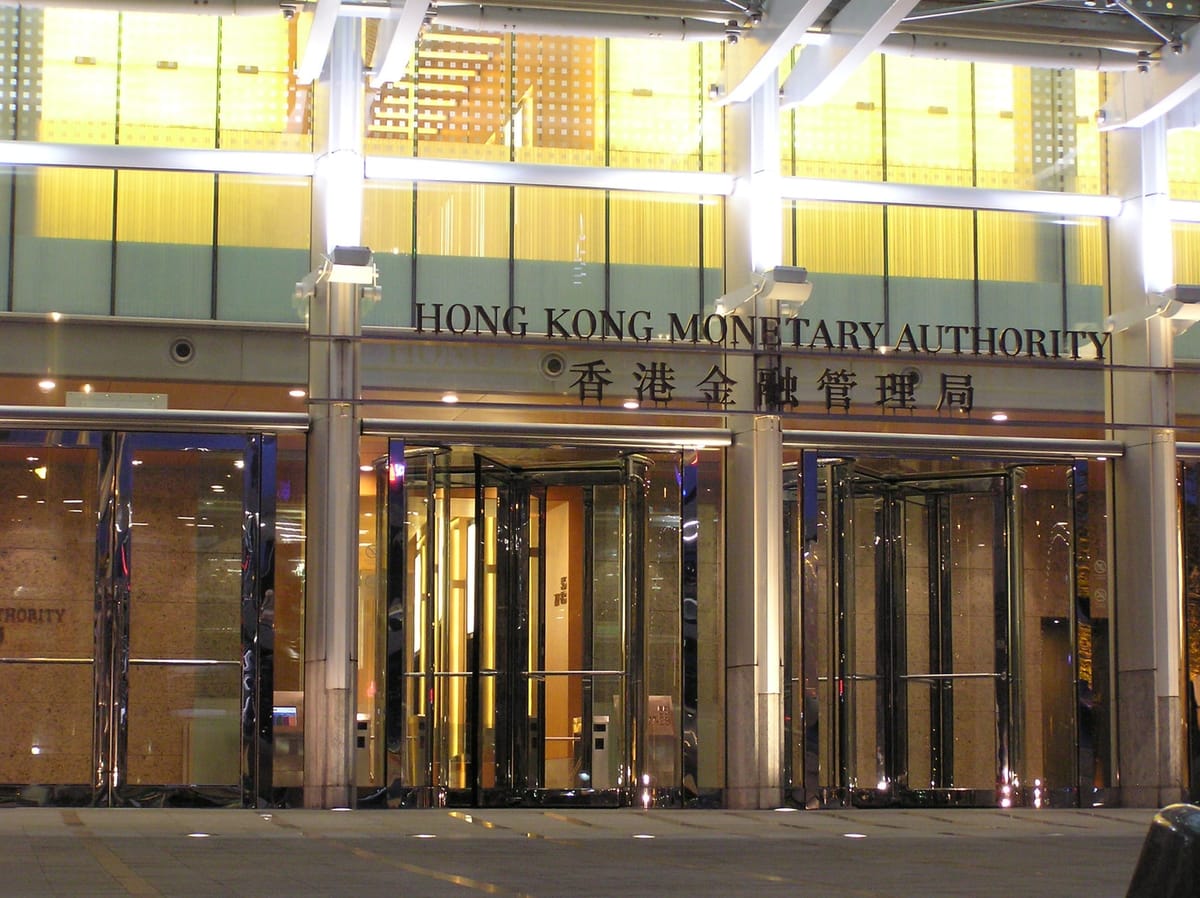
That distinction helps explain the Hong Kong–Malaysia cooperation announcement released on 6 October 2026. The Hong Kong Monetary Authority and Bank Negara Malaysia agreed to work on compliant cross-border stablecoin use cases, promote local currencies in bilateral trade and investment, and strengthen connectivity between their Real Time Gross Settlement systems. These are related ambitions, but they address different parts of a payment. None of them automatically removes the need for foreign exchange.
Start with the currency of the obligation
Before comparing a payment route, identify what the recipient must actually receive. A Malaysian supplier's invoice in MYR creates a different task from that same supplier invoicing in HKD. The address of the business does not settle the question: the agreed invoice currency does.
Starryblu offers a concrete example of why the destination and account currency are different questions. Its Global Account supports USD and HKD balances, while its official Alipay+ guide lists Hong Kong and Malaysia among supported spending destinations. A purchase at a participating merchant is a different endpoint from a supplier requiring MYR in a bank account. Choose the endpoint first, then establish the account balance, conversion and available payment option needed to reach it.
The example separates two decisions that can get blurred in a cross-border headline: which currency you need and which route will deliver it. Once you know the obligation, you can judge whether a new route removes a conversion, changes who performs it, or simply carries the same currency more efficiently.
Local-currency use changes the invoice question
Promoting local currencies in trade and investment can encourage businesses to consider how contracts are denominated. But the announcement does not say that every Hong Kong–Malaysia transaction must use a particular currency, nor does it set a retail exchange price.
Consider a Hong Kong buyer with HKD revenue purchasing from a Malaysian supplier. If the parties agree on an MYR invoice, the buyer needs MYR and must arrange the conversion from its available funds. If they agree on an HKD invoice, the buyer can pay the invoice currency while the supplier must decide how to meet any MYR costs from that receipt. In this example, changing the invoice currency moves the immediate exchange decision between the parties. It does not make their different currency needs disappear.
Commercial arrangements may handle this in several ways, including an agreed price that takes the currency exposure into account. The useful question for a business is therefore who will handle the mismatch between income and expenses, and on what terms. “Local currency” describes the denomination being encouraged; it is not a promise that every participant's income and bills will match.
RTGS connectivity addresses another part of the problem
RTGS stands for Real Time Gross Settlement. At the institutional level, it concerns settlement of individual payments rather than combining them into a later net amount. Better links between systems can matter to institutions arranging the movement and settlement of different currencies. The October announcement identifies that connectivity as an area for further cooperation, rather than describing a finished consumer product.
The institutions behind an FX transaction have a two-sided problem: one party delivers one currency while the other delivers the second. If one leg settles without the other, a participant can be exposed after paying away its funds. The BIS's Project Meridian FX tested synchronisation so that one leg transfers only if the other does. This explains a potential value of connecting wholesale infrastructures: addressing settlement risk. Meridian FX is a separate research project, not the technical design or an announced feature of the Hong Kong–Malaysia cooperation.
For an ordinary payer, a separate customer-facing service must turn the institutional arrangement into a usable transaction. It needs to accept your instructions, identify the recipient, provide the applicable quote and make funds available at the destination. An improvement in one settlement stage may help that service, but it does not tell you its total charge or when your recipient can use the money.
| What you are evaluating | The question that decides usability |
|---|---|
| Invoice currency | What exact amount and currency must the recipient receive? |
| Exchange quote | How much leaves your balance for that recipient amount, including applicable charges? |
| Settlement arrangement | Which institutions settle the payment, and which customer service gives you access? |
| Receiving endpoint | When will the recipient have the required currency in a usable account? |
A stablecoin adds an asset choice
A dollar-denominated stablecoin aims to maintain a value linked to dollars. It is a claim involving its issuer and arrangement, rather than a Hong Kong dollar balance simply because it can be sent to someone in Hong Kong. The BIS explains this distinction in its discussion of stablecoins and the monetary system.
Take the HKD bill in our example. If the recipient wants HKD in a bank account, delivering a dollar stablecoin to a wallet leaves another task: someone must exchange or redeem the token, convert currencies where needed, and complete the HKD receiving step. A wallet transfer may be one stage of the journey. The endpoint required by the bill still determines whether the payment is complete.
If a recipient instead agrees to accept and retain that token, the endpoint is different. You would then be evaluating the agreed asset, its issuer and redemption conditions, rather than treating it as interchangeable with a local bank balance. This is why the announced policy work on compliant use cases matters: a useful service requires an actual arrangement around the asset, access and destination, as well as the ability to move a token.
Starryblu connects an account to a merchant endpoint
The payment network and the bank-settlement initiative should also be kept separate. Alipay+ lists Starryblu as a mobile payment provider supporting both merchant-presented and user-presented QR modes. Its document history records that addition on 26 June 2026, before the October bilateral announcement. This is a documented merchant-payment connection, rather than a feature inferred from the new RTGS cooperation.
In everyday terms, the two modes mean you scan a supported merchant's Alipay+ code using Starryblu, or display your Starryblu Alipay+ payment code for the merchant to scan. The official Starryblu: Alipay+ Scan & Pay Guide shows both workflows and includes Hong Kong and Malaysia in its destination list. Account eligibility and merchant support still determine whether the particular payment is available.
Imagine a participating Malaysian shop with a MYR 120 bill. First confirm that the merchant accepts the applicable Starryblu Alipay+ route, then use the mode the checkout offers. Before authorising, verify the merchant, bill amount and the currency and total deduction shown for your payment. Afterwards, match your payment result with the merchant's confirmation. The goal is to settle that purchase; it does not establish a MYR bank receiving account or a new MYR balance in Global Account.
This is a materially different task from the earlier supplier example. If the supplier requires MYR credited to a named bank account, completing a shop purchase by QR does not satisfy that invoice. The recipient's instruction tells you which service to investigate, even when the recipient and merchant are both in Malaysia.
Keep the next obligation inside the balance plan
Starryblu Global Account supports balances in CNH, USD, SGD, EUR, GBP, NZD, HKD, AUD, JPY and CAD. In the same account, you can consider the balances you already have before evaluating an available exchange. Pairs, rates and fees follow the actual transaction confirmation page.
For a separate hypothetical budget, assume you have USD 2,000 and HKD 1,000 available in Starryblu, owe USD 600 next week, and need a total HKD 4,000 for another obligation. Reserve the USD 600 in your own budget, leaving USD 1,400 for other needs. The HKD shortfall is 3,000, since you already have 1,000; the decision is whether the available exchange quote can cover that shortfall within the remaining USD budget.
Record the total USD deduction required for the quote, including applicable fees, and compare it with USD 1,400. If the required amount exceeds that budget, the two balances do not cover both obligations yet. If you proceed, reconcile the actual deduction and resulting HKD balance. Reserving a figure in your budget is your planning step, not an automatic lock on funds.
This use of Global Account connects existing money to the next specified currency need. Its QR capability separately connects eligible users to supported merchant purchases. Readers can explore the account structure in Starryblu 全球多币种账户详解:MAS 牌照、资金保障与微信扫码支付, a Chinese-language product explanation.
Make the next comparison on the same endpoint
After an exchange or a QR purchase, return to your Starryblu balances and reconcile the actual deductions against the amount reserved for the next obligation. For a merchant purchase, retain the payment result and the merchant confirmation; for a bank-account obligation, verify that the recipient obtained the required bank funds. These are different forms of completion evidence.
If a customer-facing service emerges from the Hong Kong–Malaysia cooperation, compare it against that same task: the same recipient, required currency and amount, and deadline. The announcement itself gives no consumer launch date, retail fees or eligibility for a new transfer service. Those details would let you compare a live alternative rather than a policy ambition.
Readers preparing supported currency balances or exploring supported Alipay+ merchant payments can use the official Starryblu registration button below, with invitation code MCHB003. Start with the actual balance and payment option available to your account, and a recipient whose required endpoint is clear.
Two distinctions worth keeping
If my invoice and balance use the same currency, is the payment cost-free?
Matching currencies can remove the need for that currency conversion, but it does not establish the payment's charges. Use the terms and quote for the actual receiving route to determine the remaining cost.
Does “real time” mean the recipient can immediately spend the funds?
Check which stage the description covers. Settlement between institutions and usable funds in a customer's account are different endpoints; the provider's processing and receiving conditions determine the latter.
Comments ()